


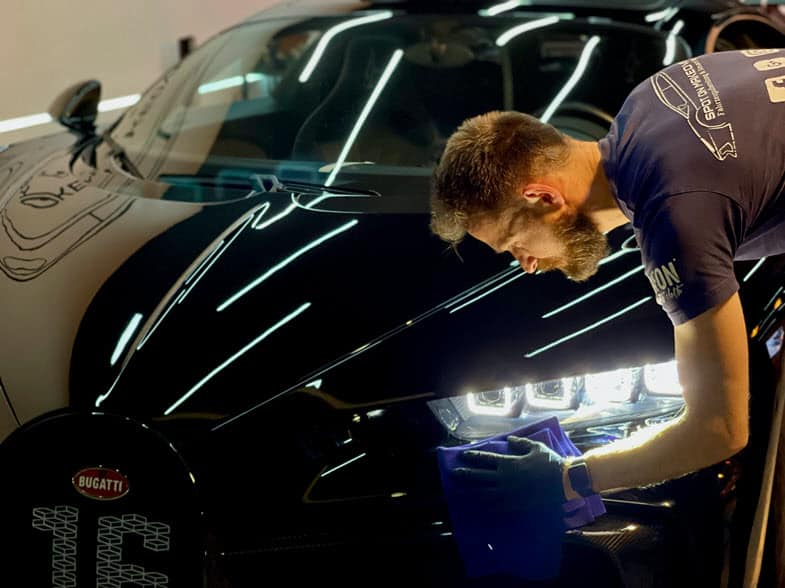
Ready for the top 10 DIY Car Detailing Tips? Get your vehicle looking like new with these proven interior and exterior car detailing tips used by the pros.
#1 DIY Car Detailing Tips: Freshen Up Your Car’s Interior
They say cars are an extension of a person’s personality and habits. Unfortunately, even the cleanest individuals deal with foul smelling interior at times. Here is a great car detailing tip for removing bad interior smells.
To neutralize food, tobacco smoke and musty smells, use an aerosol can of Dakota Non-Smoke.
Hold the can 12 to 14 in. away from fabrics and, lightly spray the headliner (don’t soak it), seats, door panels and carpet. Then, turn the fan to high or max and switch the system to recirculate mode. Find air return and spray the mist into the opening. Leave the windows closed for at least one hour.
Change your car’s interior cabin air filter to really neutralize your vehicle’s interior smell. This step is more complicated but it’s not rocket science, and anyone can do it. Read our How to replace a car interior filter post for more details.
#2 DIY Car Detailing Tips: Window Cleaning, Including Smudges
Ever notice smudge or grime lines on your window tops, especially when rolled down? The top of your windows is the section most exposed to not only the weather but also greasy hands!
Window smudges are commons but especially prevalent if you add kids to the equation.

Most people overlook this detail when giving their vehicle a quick wash so don’t forget to clean your windows for a complete car detailing job.
The go-to solution for most is to use Windex and a clean, lint-free microfiber rag. While there’s nothing wrong with using Windex, note that many window cleaning products like Windex contain ammonia or alcohol which, can leave streaks and even a thin film that attracts dust and moisture.
So if you’re going to use a commercial window cleaner, pick one that is vinegar-based like, Windex Vinegar Glass and Window Cleaner, over one with ammonia or alcohol. Or, for a homemade solution, follow our proven, DIY window cleaning recipe below.
Homemade DIY Window Cleaning Solution
One of our favorite window cleaning hacks is to create your own window cleaning solution using simple distilled vinegar, also known as white vinegar. This common household product is offers versatile applications and it’s acidic composition is ideal the removal of streaks, smudges and film that can accumulate on your windows and other glass surfaces.
To clean your windows with your own homemade window cleaner, follow these easy steps:
- Mix one part distilled vinegar to 10 parts warm water in a spray bottle.
- Wipe down the window with a a soft, clean, lint-free microfiber cloth or paper towel to remove dust before you spray your solution, then spray the entire surface.
- Use your lint-free towel to rub the vinegar mixture and work it into the dirty spots on your window. Feel free to be generous with the amount of cleaner you apply to the cloth or paper towel, but avoid getting any cleaning solutions on the wood, fiberglass or vinyl frames, as they may discolor the finish.
- Use a second clean cloth to dry your window as thoroughly as possible. You’ll want to do this quickly after cleaning in order to prevent streaks, so if you have multiple windows to clean, it’s best to do them fully one at a time instead of spraying all of them at once.
- Rinse with clear water if streaks remain after cleaning.
#3 DIY Car Detailing Tips: Rinse Before Washing
Too often, car owners will start washing a car without first rinsing it. When it comes to preserving your vehicle paint coat, next to UV rays, dirt is your enemy.
If you begin washing your dry paint with soapy water prior to rinsing, you’ll grind the surface dust and road grit into your paint finish, possibly scratching it.
Professional detailers always start with a clear water rinse to first remove as much dust and dirt as possible. Simply wetting the surface removes many of the abrasive particles that could hurt your paint coat.
Pre-rinsing is the easiest step when detailing a vehicle – all you need is running water and a hose. Pressure washers are great at removing mud and dirt accumulation but, you should always start with a soft rinse using a hose.
Rinsing your car prior to washing it will help minimize scratches on your paint coat that can be seen when looking at a car from an angle. If scratches are beginning to surface, then check out our How to Polish a Car like a Pro article to help restore your car’s sheen.
#4 DIY Car Detailing Tip: Use The Right Soap
The best way to wash a car is to do it yourself and, using the correct car wash soap matters for two reasons.
First, using the wrong soap can actually strip vital oils from your paint causing it to age prematurely.
Second, washing your car yourself vs. an automated car wash behind the local gas station will reduce abrasions caused by massive spinning brushes that slap wet, soapy tendrils against the surface of your vehicle.
Often, automatic car wash brushes are rarely fully rinsed between cycles which, accumulate dirt and grime that cause tiny swirl marks into the clear-coat visible in bright sun.
Do not use dish soap as car soap
Dishwashing liquid is the go-to choice for most DIYers. You don’t want to use something generic like dish soap or laundry detergent because they are too harsh.
Car wash soap (or shampoo) is specifically designed to be less aggressive than products meant to clean a crusty lasagna pan or the shirtsleeve you dragged through your soup last week.
You want a cleansing product with good lubricity and easy foaming to lift and suspend contaminants embedded on the surface of your paint. That being said, even narrowing your choices will leave an overwhelming number of options.
Car wash soap can be broken down into three categories: basic, basic with additives, and rinseless or waterless washes
- Basic car wash soap
- Options like Meguiar’s Gold Class Car Wash Shampoo & Conditioner are a good start and are usually available at local auto-parts stores.
- Products like this one remove contaminants without stripping any wax or polish from your paint.
- Basic car wash soap with additives
- Options like The Chemical Guys Bodywash & Wax perform the same function with the extra benefit of adding a thick coat of wax.
- Though a wash like this is no substitute for a proper coat of wax, it’s a good supplement to the existing layer of protection between full wax jobs.
- Rinseless and waterless washes
- These are ideal when water is not available or for folks looking to reduce their water usage.
- We tested waterless car wash solutions and liked Aero Cosmetics Wash Wax and McKee’s 37 Waterless Wash On the Go. Both Optimum No Rinse and Ultima Waterless Wash Plus+ are also highly regarded in the detailing community for their excellent lubricity and impressive versatility.
- These products are desirable because, properly diluted, they can also be used as a clay lube or quick detailer. So go forth, buy some car wash soap, and get to sprucing up your ride!